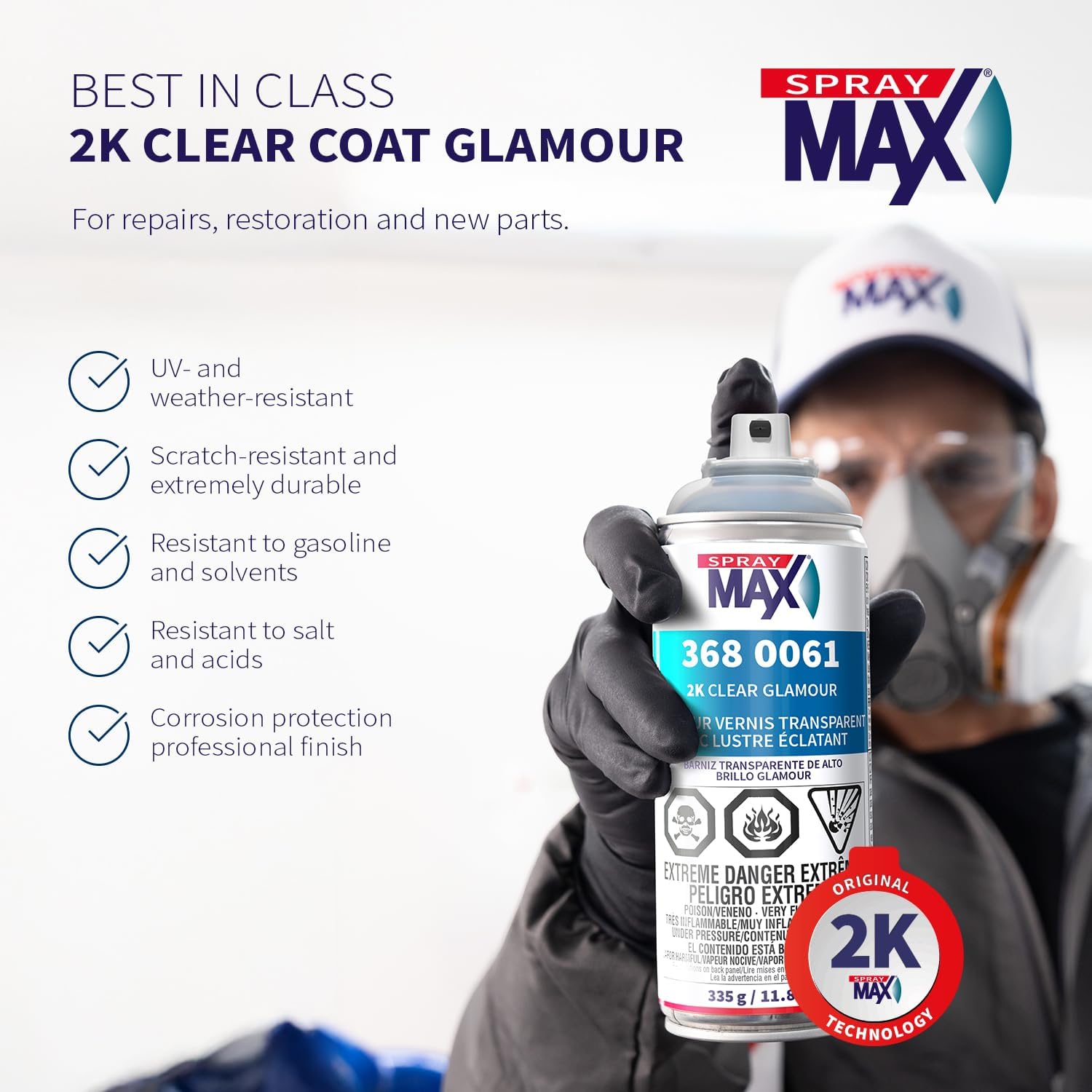
If you’ve ever stood in an auto parts store staring at two very different price tags — a $25 aerosol can and a $140 gallon kit — and wondered which one is actually right for your project, this article is for you. “2K clearcoat” just means a two-component clear finish: you combine a base resin with a separate hardener (also called an activator), and a chemical reaction creates a hard, durable, UV-resistant film over your paint. It’s the industry standard for anything you want to last more than a couple of years outdoors. The “2K” distinguishes it from single-stage rattle cans, which air-dry but never chemically cure and stay relatively soft. Both aerosol cans and gallon kits can deliver genuine 2K chemistry — the format changes how you mix, apply, and budget, not the underlying chemistry. By the end of this piece, you’ll know exactly which format fits your job, your shop setup, and your budget.
The Real Difference Between 2K Aerosols and Gallon Kits
Let’s get concrete about what separates these two formats, because it’s not just “one sprays itself.”
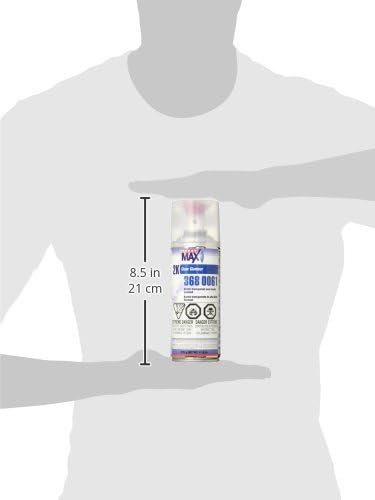
2K aerosol cans — products like Spraymax 2K Clear, Evercoat 2K Aerosolv, and Eastwood’s 2K AeroSpray — contain both the resin and a sealed hardener cartridge in the base of the can. You twist or press a button to break the cartridge, shake the can to mix, and you have a limited pot life window before the mixed material gels and becomes unusable. According to the Eastwood Company’s published 2K AeroSpray Clear Product Data Sheet (2025), their aerosol formulation is rated at approximately 48 hours of pot life after activation — generous for the aerosol format. The spray tip is fixed at roughly a 6–8 inch fan width, pressure is preset, and you get what you get. No HVLP gun required. No reducer math. No waste from over-mixing.
Gallon kits — such as Sherwin-Williams Ultra 7000, PPG DCU2021 Concept Urethane, or SPI (Southern Polyurethane Inc.) Universal Clear — require a spray gun, an air compressor capable of sustained pressure at the gun, and you’ll mix resin to hardener in a ratio that varies by product, typically 4:1 or 2:1 by volume. The PPG Refinish DCU2021 Concept Urethane Clearcoat Product Data Sheet (2024) specifies a 4:1 mix ratio with an optional 10% reducer by volume for temperature adjustment. Pot life in a mixed cup runs 45–90 minutes depending on temperature and hardener speed. You control fan width, fluid rate, and atomization. Waste, overspray, and cleanup are real cost factors. But you get genuine professional-grade film build, multiple-panel coverage, and the ability to dial in conditions.
I-CAR’s Clearcoat Selection and Application Fundamentals training module (REF-100, 2023) notes that gun-applied 2K urethanes consistently achieve 2.0–3.0 mil dry film thickness (DFT) per coat under controlled conditions — the benchmark for long-term UV and chip resistance. Aerosol 2K clears are capable of reaching 1.5–2.0 mil DFT per coat — adequate, but the margin for a thick, sand-and-buff-safe topcoat is tighter.
Cost-Per-Panel: Where the Math Gets Uncomfortable
This is where most people make their mistake — they price the can, not the panel.
By the numbers:
| Format | Unit cost (2026 avg.) | Coverage per unit | Cost per panel (avg. bumper/door) |
|---|---|---|---|
| 2K aerosol (11 oz) | $22–$28 | 1–1.5 panels at 2 coats | $18–$28/panel |
| Gallon clearcoat kit (gal resin + qt hardener) | $130–$200 | 10–14 panels at 2 coats | $11–$18/panel |
Panel size assumed at approximately 8–10 sq ft. Coverage estimates derived from published manufacturer product data sheets and application guides.
The aerosol format costs roughly 1.5–2× more per panel than a gallon kit at scale. But that math only matters if you’re spraying more than 4–5 panels. For a single door ding repair, a single bumper refinish, or a spot repair after a minor collision, the aerosol wins on total outlay — you’re not buying a gallon of clear to use a cup of it.
Hot Rod Magazine’s 2023 article “Rattle Can vs. Spray Gun: How Good Can Aerosol Finishes Get?” found that weekend restorers doing full-car resprays (16–22 panels) consistently burned through 4–6 aerosol cans for clearcoat alone, landing at $100–$160 in aerosol cost versus $130–$180 total for a gallon kit with professional film thickness to spare.
The break-even point for a garage respray is roughly 5–6 panels. Below that threshold, aerosol format makes financial sense. Above it, gallon kits win on cost-per-panel and film quality.
Don’t forget the hidden costs on the gallon side:
- HVLP spray gun: $80–$350 depending on quality (TCP Global, Devilbiss, SATA entry-level)
- Air compressor capable of sustained CFM: likely already owned, but a real barrier for new builders
- Mixing cups, strainers, reducer (add $15–$30 per project)
- Cleanup solvent: $8–$15 per session
If you don’t own a gun and compressor, your true first-project cost for a gallon kit is $350–$600 before you buy a drop of clear. That changes the math entirely for a one-time project.
Application Quality: Where the Gap Really Lives
Chemistry matters, but application variables matter more for a show-quality finish. The following three tiers cover the full range of garage-respray scenarios, from quick spot work to full restorations.
Budget Tier — Aerosol 2K for Spot Repairs and Single Panels
SprayMax
$28.99
In stock on Amazon
Check price on AmazonFor 1–4 panel jobs, aerosol 2K is the practical answer. Spraymax 2K is the most consistently recommended product in this format across professional and hobbyist communities — widely stocked, well-documented, and the hardener activation mechanism is reliable. Eastwood’s 2K AeroSpray is a strong domestic alternative with accessible customer support.
Aerosol 2K strengths:
- Zero setup time — activate, shake, spray
- Consistent atomization for small surfaces
- No reducer ratio errors, which are a major source of soft, slow-curing clear in gallon applications
- Ideal for blend panels, spot repairs, and plastic trim where overspray is hard to control
Aerosol 2K weaknesses:
- Fixed fan width limits control on tight-radius panels (A-pillars, mirror housings)
- Pressure drops as the can empties, creating inconsistent wet film on final passes
- Film build per coat is shallower — achieving sand-and-buff depth may require 3–4 aerosol coats versus 2–3 gun coats
- Autobody News’ 2024 Spray-on Clearcoat Application Guide notes that aerosol clearcoats are prone to dry spray texture on panels wider than 18 inches when ambient temperature exceeds 80°F, because the carrier solvents flash before the droplets fully wet out
Budget one can per 1.5 panels and purchase one extra as a reserve.
SprayMax
$28.99
In stock on Amazon
Check price on AmazonMid-Tier — Entry Gallon Kits for 5–10 Panel Resprays
Speedokote
$89.00
In stock on Amazon
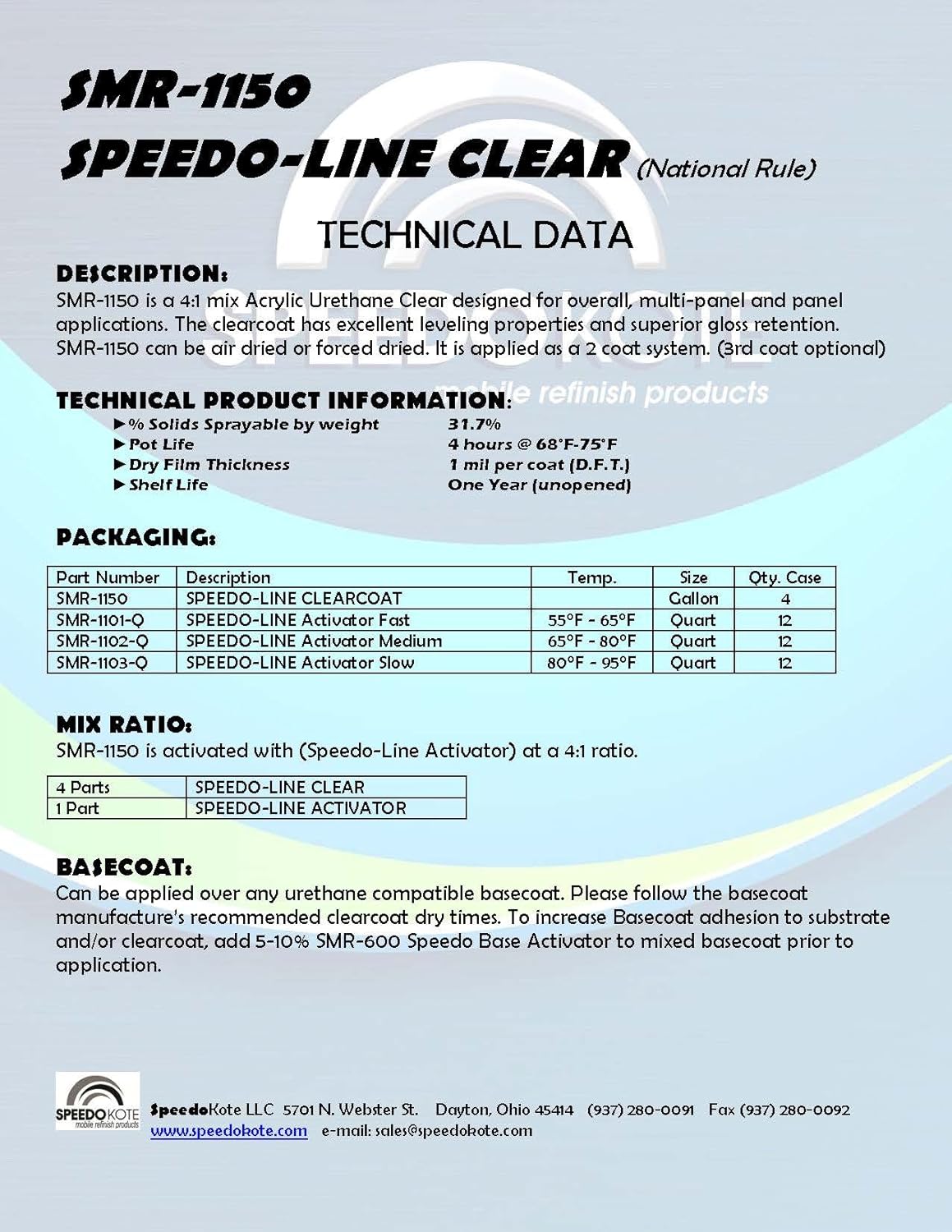
Check price on AmazonFor a partial respray covering a hood, roof, trunk, and two doors — the classic weekend project — a mid-tier gallon kit is the cost-efficient choice. Sherwin-Williams Ultra 7000 and SPI Universal Clear are consistently rated by small-shop operators as forgiving on application windows and compatible with a wide reducer speed range.
According to the Sherwin-Williams Automotive Finishes Ultra 7000 Urethane Clearcoat Technical Data Sheet (2025), a standard two-coat application with medium hardener achieves full cure at 72°F in approximately 16 hours — giving a next-day polish window that fits a weekend workflow.
At this tier, gun settings matter. I-CAR’s Clearcoat Selection and Application Fundamentals module (REF-100, 2023) identifies “reducer ratio and temperature mismatches” as the leading cause of clearcoat failure in DIY applications — not product quality. A gallon of well-regarded clear applied at the wrong reducer ratio in an 85°F garage will perform worse than a correctly activated aerosol clear. Pull up the Reducer & Hardener Ratio Chart on this site before you pull a trigger.
Hidden costs at this tier to budget explicitly:
- Mixing cups and strainers: $10–$15
- Reducer (slow/medium/fast to match temperature): $15–$25 per quart
- Cleanup solvent: $8–$15 per session
Speedokote
$89.00
In stock on Amazon
Check price on AmazonPremium Tier — Professional-Grade Gallons for Full Restorations
SHERWIN FC720
$99.56
In stock on Amazon
Check price on AmazonFor full-car resprays, show builds, or any project where you’re blending into OEM or custom basecoat and expect to wet-sand and machine polish to depth, professional-grade gallon kits are the correct tool. PPG Refinish DCU2021 Concept Urethane Clearcoat and BASF Glasurit 923-240 (from BASF’s published VOC-compliant product line) are film-quality leaders at this tier. Expect to pay $180–$250 for a gallon kit with appropriate hardener.
The PPG Refinish DCU2021 Concept Urethane Clearcoat Product Data Sheet (2024) confirms a 4:1 mix ratio and specifies application at 26–29 PSI at the gun cap for standard fluid tips — the kind of detail that matters when you’re building a 6-mil DFT sandwich (two coats at 2.0–3.0 mil each) designed to be safely cut with 1500-grit wet sandpaper and then polished.
Gallon kit strengths at premium tier:
- Full control over fan, fluid, and air pressure — you adapt the gun to the panel, not vice versa
- 2.0–3.0 mil DFT per coat per I-CAR REF-100 benchmarks means a genuine polish-safe film build
- Reducer speed choice (slow, medium, fast) lets you dial recoat windows and flow-out for your shop temperature
- Pot-life flexibility of 45–90 minutes in the cup gives you time to work large surfaces methodically
Gallon kit weaknesses to plan around:
- Pot-life pressure: if your first panel takes longer than expected, you’re racing your mixed cup
- Overspray and cleanup require dedicated time and materials
- Learning curve on gun settings is real — first-timers often lay down too dry or too wet on the first panel
SHERWIN FC720
$99.56
In stock on Amazon
Check price on AmazonWhich Format Is Right for Your Current Project?
Here’s the decision rule, stated plainly:
If you’re clearing 1–4 panels, don’t own a spray gun, or this is a spot repair / blend job: Use 2K aerosol. Budget one can per 1.5 panels and always buy one extra.
If you’re clearing 5–10 panels and own or plan to own a spray gun: Use a mid-tier gallon kit. Sherwin-Williams Ultra 7000 and SPI Universal Clear offer the best combination of application forgiveness and film quality for this range.
If you’re clearing a full car or building to show or polish quality: Use a premium gallon kit such as PPG DCU2021 or BASF Glasurit 923-240. The film depth and reducer flexibility justify the added cost and setup time.
If you’re on the fence at 4–5 panels: Run the cost-per-panel calculator with your specific panel count and your honest assessment of gun ownership. If buying a gun gets you to a $12/panel cost on this job and every subsequent job, it’s likely the right call. If this is a one-time project and you’re renting or borrowing a gun, factor that friction into your decision.
One final note on format longevity: 2K aerosol cans have a shelf life of approximately 12–18 months unopened and are single-use once activated. Gallon kits, if the hardener container is resealed after use, can maintain usability for 6–12 months in cool, dry storage — making them the better call if you’re painting in phases or plan to return for touch-ups on a long restoration.
Before you mix anything — aerosol or gallon — pull up the Pot Life Cheat Sheet and the Reducer & Hardener Ratio Chart on this site and match your product, temperature, and application window before you open a can or pull a trigger. That 90 seconds is the difference between a panel you’re proud of and one you’re sanding back to bare metal.
Published May 2026. Product data sheet specifications and pricing current as of publication date. Always verify reducer and hardener ratios against the current manufacturer technical data sheet for your specific product lot.