You’ve probably seen a custom motorcycle tank or a show-truck hood with a finish that almost glows from the inside — colors that shift, sparkle, or seem three feet deep. Those effects come from three families of specialty pigment: candy (a translucent tinted clear coat applied over a reflective metallic base, creating depth the way stained glass creates color), pearl (fine metallic flakes, usually mica, that produce a soft iridescent shimmer inside a basecoat), and metal flake (larger, coarser glitter-like particles suspended in clear or tinted binders). Until about five years ago, achieving any of these effects reliably meant owning a professional HVLP (High Volume Low Pressure) spray gun — a tool that atomizes paint using compressed air — and a dedicated spray booth. That’s still the gold standard. But the aerosol segment has matured fast, and if you understand what these products can and can’t do, you can get genuinely impressive results from a rattle can on accent panels, helmets, gas tanks, and interior trim. This guide will show you how to choose the right product for each effect, sequence the stages correctly, and avoid the mistakes that turn a cool custom finish into an expensive strip-and-redo.
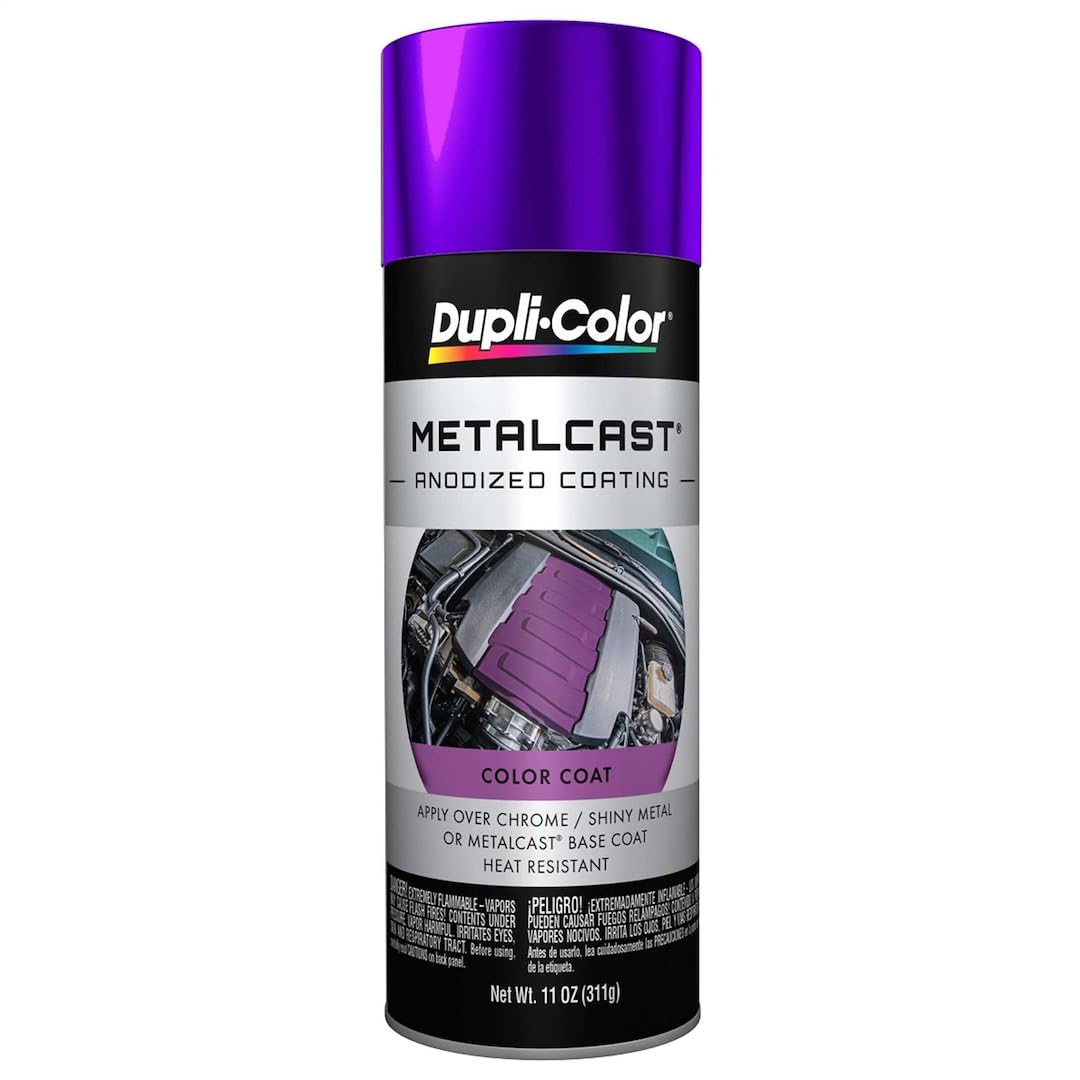
| EDITOR'S PICK[SprayMax 2K Glamour High Gloss…](https://www.amazon.com/dp/B00W2D806Y?tag=greenflower20-20) | Mid-tier[Dupli-Color MC201 Metalcast Aut…](https://www.amazon.com/dp/B00099BJUC?tag=greenflower20-20) | Budget pick[Dupli-Color Metalcast Anodized…](https://www.amazon.com/dp/B000994BUM?tag=greenflower20-20) | |
|---|---|---|---|
| Type | 2K Clear Coat | Anodized Coating | Anodized Coating |
| Color | Clear | Blue | Purple |
| Size | 11.8 oz | 11 oz | 11 oz |
| UV Resistant | ✓ | — | — |
| Scratch Resistant | ✓ | — | — |
| Price | $31.99 | $17.41 | |
| See on Amazon → | See on Amazon → | See on Amazon → |
What “Custom Aerosol” Actually Means — and Where the Limits Are
Let’s set honest expectations before touching a product name. A professional candy finish from a spray gun typically involves: a sealed primer, a polished silver or chrome basecoat (the “mirror” that candy colors need to glow), two to four translucent candy coats, and a UV-stable urethane clear. Each stage has a precise pot life (the window during which mixed paint stays usable) and flash time (how long you wait between coats before the solvents have evaporated enough to add another layer). Total cost per panel in a shop environment runs $80–$180 in materials alone, per the VehiclePaints.com Cost-Per-Panel Calculator.
Aerosol versions compress that process in ways that produce real compromises:
- Metallic bases in aerosol format tend to be aluminum-flake silver, not the deep chrome-mirror bases a gun system uses. Candy coats over aluminum flake look good — just not as luminous as over a wet-sanded mirror base.
- Flake size is limited by the aerosol nozzle orifice. Coarse “House of Kolor” style hex flake (0.025–0.060 inch particles) clogs standard aerosol valves; most aerosol metal-flake products max out at fine or micro-flake sizes (0.004–0.015 inch).
- Film build is harder to control. Laying down four even wet candy coats without sags or dry spray requires a practiced hand — the same hand that gets easier to develop with a gun than a can.
None of this means aerosols are a compromise for everyone. For accent panels, gas tanks, helmets, custom wheels, or small project vehicles that will never see a concours judge, the aerosol candy and pearl market in 2025–2026 is genuinely impressive. The decision frame is simple: if the piece is smaller than a door panel and you can rotate it for even coverage, aerosol custom finishes are a legitimate tool. If you’re doing full-car candy, buy a gun.
The Three Effects: Product Landscape and What to Buy
Candy Colors
The candy effect requires a light-reflective base underneath the translucent candy coat. In aerosol format, the workflow is:
- Sealer/primer (gray or white, sanded smooth)
- Chrome or bright silver aerosol basecoat — this is your reflective mirror
- Two to four light passes of the candy coat, building depth progressively
- Two to three coats of UV-stable clear
Dupli-Color’s Effect Coats line (the “Candy” sub-series) is the most widely distributed aerosol candy system in the U.S. as of mid-2026. Per Dupli-Color’s 2025 Product Bulletin, the candy coats are formulated over their own “Chrome Effect” aerosol base for best results; using a third-party silver base can cause adhesion issues if the binders aren’t compatible. The practical flash window between candy coats is 10–15 minutes at 70°F — tighter than most beginners expect. Rushing it causes solvent trap (where solvents get locked under a fresh coat and cause bubbling days later).
House of Kolor’s Kandy Koncentrates (KK-Series) are not a true aerosol system — they’re meant for gun application. However, House of Kolor’s 2025 Technical Data Sheet notes that some distributors offer pre-reduced KK-Series in aerosol “touch-up” format for small repairs and accent work. If you find these, treat them as advanced-practitioner tools: the pot life is short (~45 minutes at room temperature) and they require a compatible urethane clear from the same manufacturer family.
By the numbers — candy coat depth vs. passes: 1 pass: base tint, low depth 2 passes: visible color depth, light transmission still high 3–4 passes: full saturation, darkest effective depth before muddying 5+ passes: color typically goes flat/opaque — you’ve lost the candy effect
Pearl Finishes
Pearl pigments (fine mica particles, usually 10–60 microns in diameter) are suspended in a clear or tinted binder and applied over a white or light-colored base to maximize the shimmer effect. Over dark bases, pearl reads as subtle; over white, it reads as iridescent.
Rust-Oleum Automotive’s Custom Metal Flake Aerosol (despite the name, the fine-flake SKUs in this line function closer to a coarse pearl than true metal flake) has been well-reviewed across aggregated owner feedback on automotive forums. Per Rust-Oleum’s 2024 Technical Data Sheet, the product is designed as a mid-stage effect coat: apply over a sanded basecoat, then clear over the top. Owners consistently report that two medium-wet passes produce even coverage without particle clumping; going heavier in one pass tends to cause the flake to settle unevenly before the binder flashes.
For dedicated pearl aerosols, Spraymax 1K Pearl Effect cans (distributed through TCP Global and similar professional finishing suppliers) offer a more refined mica suspension. The 1K designation means it’s a single-component system — no hardener needed — which simplifies the workflow but limits chemical resistance compared to a 2K (two-component, hardener-activated) system. For display pieces or parts that won’t see heavy abrasion, 1K pearl aerosols are fine. For working vehicles, clearcoat over everything with a 2K product.
Metal Flake
True metal flake in aerosol format is a niche but real product category. The constraint, as noted above, is particle size: anything above about 0.015-inch hex flake will clog a standard aerosol valve. Products marketed as “metal flake” in aerosol format are almost always micro-flake or fine-flake products — they produce sparkle but not the chunky “swimming pool” flake look of a 1970s custom van.
Dupli-Color’s Custom Wrap series includes a metal-effect flake aerosol that reviewers note is closer to a glitter-clear than a traditional flake; it’s best used as a final effect layer before clear rather than a standalone color coat. Per Dupli-Color’s 2025 Product Bulletin, this product is not compatible with lacquer-based undercoats — it requires an enamel or urethane base.
If you specifically need larger flake and are committed to aerosol application, some custom shops use a two-step workaround: shoot a wet clear coat, then immediately dust loose flake (purchased separately in bulk) into the wet clear using a “flake gun” (a manual shaker tool). This isn’t strictly aerosol application, but it’s compatible with aerosol clears and gets you into larger particle sizes. The I-CAR Industry Training Bulletin on multi-stage finish sequencing (2024) notes this technique requires careful management of the clear’s open time — typically a 5–12 minute window depending on temperature — before the flake won’t bond properly.
Sequencing and Application: Where Most Aerosol Custom Finishes Fail
The majority of failed aerosol candy and pearl jobs come down to three sequencing errors:
1. Skipping the intercoat adhesion window. Every candy and pearl system has a recoat window — a range of time during which the previous coat is tacky enough to bond with the next one but dry enough not to lift. Too early and you get solvent trap; too late and you need to scuff-sand for mechanical adhesion. The VehiclePaints.com Pot Life Cheat Sheet covers manufacturer-specific windows, but a general rule: if the previous coat feels dry to the touch but still slightly soft under light thumbnail pressure, you’re in the window.
2. Temperature and humidity drift. Aerosol valve pressure and binder viscosity both shift meaningfully outside the 65–85°F range. Auto Body News’ March 2025 analysis of VOC-reformulated aerosols noted that California- and CARB-compliant (California Air Resources Board — the regulatory body setting the tightest VOC limits in the U.S.) aerosol reformulations are especially sensitive to temperatures below 60°F, exhibiting poor atomization and uneven flake distribution. Check the ambient conditions before you start, not after you’ve already laid down two coats.
3. Rushing the clear. The clear coat isn’t just protection — on a candy finish, it’s also the final optical layer that determines gloss depth. Two thin coats of clear laid down too fast can trap solvent and go milky within 48 hours. The standard industry practice: two medium coats of clear, 15–20 minutes apart, then let the panel cure undisturbed for 24 hours before handling. If you want to wet-sand and buff the clear, wait a minimum of 72 hours for aerosol clears (versus 24 for gun-applied 2K urethanes, which cure faster due to the isocyanate hardener chemistry).
The Decision Frame: If X, Then Y
Here’s how to route your project to the right approach:
| Situation | Recommendation |
|---|---|
| Small accent panel, helmet, or tank — any candy or pearl effect | Dupli-Color Effect Coats or Spraymax 1K Pearl over compatible base; clear with 2K aerosol clear |
| Want visible hex flake, not just sparkle | Aerosol system won’t get you there; use aerosol clear with separate flake application or invest in a gun |
| Full panel or full vehicle candy | Budget $150–$300 in materials minimum and use a gun system; aerosol candy on a full door will show lap lines |
| CARB/low-VOC state, working in cold garage | Verify the specific aerosol is compliant; heat the panel (not the can) to 75–80°F before application |
| Want to practice candy technique before investing in a gun system | Aerosol is a legitimate practice medium — use it on scrap panels to learn depth-building before committing to a gun purchase |
The aerosol custom-paint segment in 2025–2026 is genuinely useful — not a compromise product, but a context-specific tool. Know the context, sequence the stages correctly, and reference the VehiclePaints.com Mix Ratio Calculator before you add any reducer to a gun-applied basecoat you’re using underneath your aerosol effect coats. When the conditions line up, a rattle-can candy finish on a motorcycle tank or a custom helmet can genuinely turn heads — and that’s the whole point.