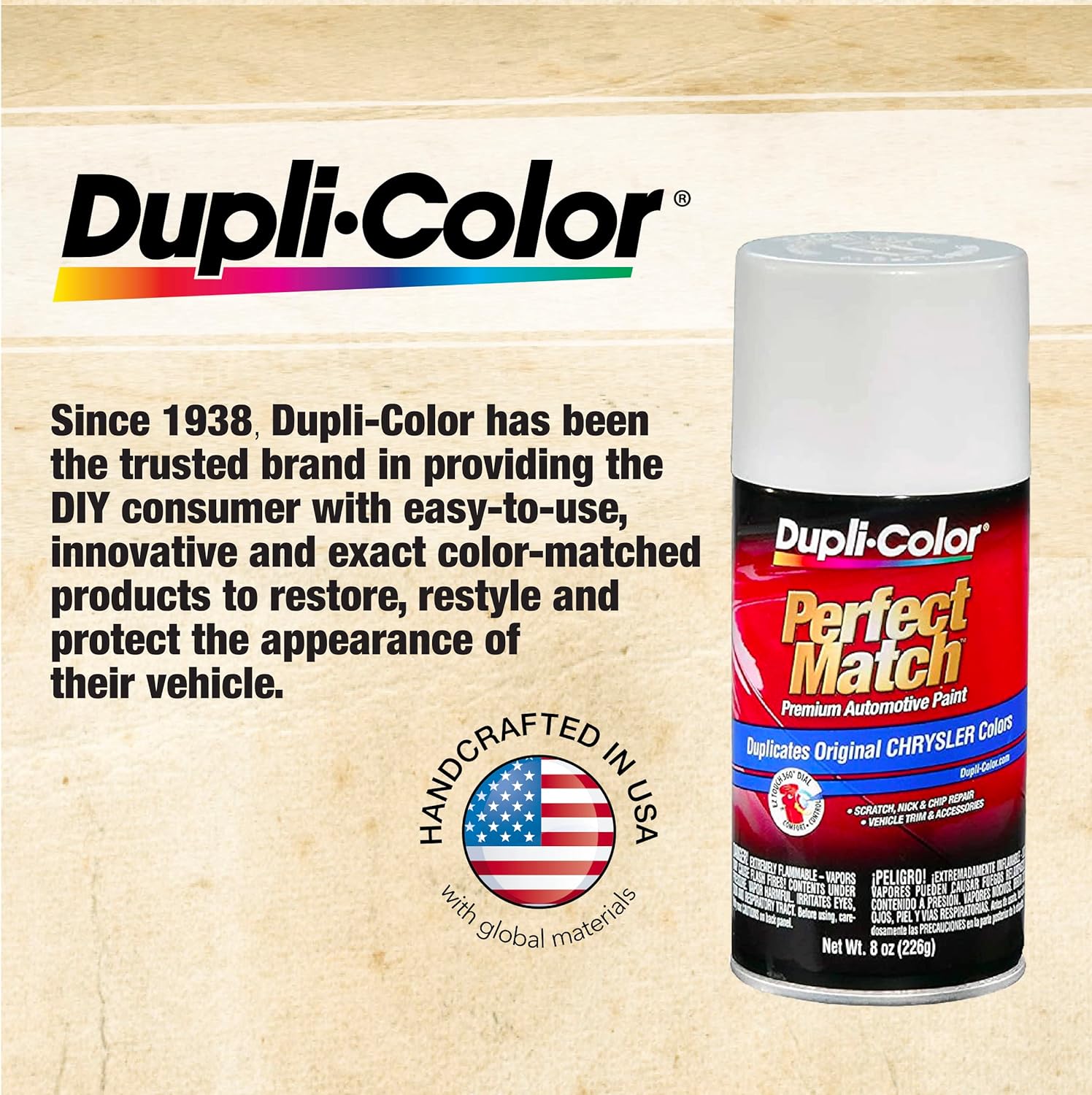
If you’ve ever stood in the auto parts store staring at a wall of spray cans wondering whether the “Paint Shop” system is meaningfully different from a regular rattle can — you’re in the right place. The Dupli-Color Paint Shop system is a two-stage aerosol refinishing approach: that means you spray one can of basecoat (the pigmented color layer) and then lock it in with a second can of clearcoat (a hard, transparent protective topcoat). Two-stage is the same fundamental architecture used in professional bodyshop refinishes — the difference here is that the chemistry is packaged in a consumer aerosol rather than a spray gun and mixing cup. That matters because it makes a factory-style finish accessible to someone working in a home garage without professional equipment. This guide will walk you through how the system actually works, where it fits in the broader DIY-to-pro spectrum, and — critically — what it genuinely costs per panel so you can budget before you buy.
What the Dupli-Color Paint Shop System Actually Includes
The Paint Shop line is Dupli-Color’s mid-tier aerosol offering, sitting above their basic lacquer spray cans and below their Bed Armor or professional-grade product lines. The system is built around three components you’ll use in sequence:
Basecoat cans run 8 oz. net weight and are formulated as an acrylic lacquer-based color coat. These are not the same chemistry as a professional urethane basecoat — I-CAR’s technical overview of basecoat/clearcoat systems draws a clear line between acrylic lacquer aerosols and catalyzed urethane systems on adhesion durability and UV resistance. Dupli-Color’s own technical data sheet (Sherwin-Williams Automotive Brands Group, 2024 edition) describes the basecoat as designed to be recoated within a specific window and sealed with their compatible clearcoat. Don’t skip the clearcoat: the basecoat alone has minimal UV protection and will fade or chalk within one to two seasons of unprotected exposure.
Clearcoat cans are also 8 oz. and deliver a high-gloss protective layer. The formulation is a acrylic lacquer clear — not a two-component (2K) isocyanate urethane. That distinction matters to practitioners: a 2K clear (like you’d get from a TCP Global or SPI urethane clear mixed in a gun) cross-links chemically for significantly harder film build and better long-term chip resistance. The Dupli-Color clear is a single-component product, which means no mix ratios, no pot life pressure, and no isocyanate safety concerns — but also a softer cured film than a catalyzed system.
Surface Primer is the recommended prep layer. Dupli-Color sells a self-etching primer and a sandable primer in the same aerosol format. The technical data sheet specifies that bare metal should receive self-etching primer before the color basecoat. On existing painted panels in good condition, a scuff with 400-grit and a wipe-down with wax-and-grease remover is the stated minimum prep.
By the numbers — Paint Shop system, single panel (door), May 2026 retail:
| Component | Cans Needed | Approx. Retail Each | Panel Subtotal |
|---|---|---|---|
| Sandable Primer | 1 | $8–$10 | $9 |
| Basecoat (color) | 2 | $12–$15 | $28 |
| Clearcoat | 2 | $10–$13 | $24 |
| Total per panel | ~$61 |
Prices sourced from aggregated retail listings as of May 2026; your local auto parts pricing may vary ±15%.
Where This System Fits — and Where It Doesn’t
Hot Rod Magazine’s comparison of spray can systems (hotrod.com, 2023) put it plainly: aerosol two-stage products are a legitimate option for small-panel work, touch-up blending, and project cars that will never see a concours judging table. That’s the honest frame for the Paint Shop system.
Where it makes sense:
-
Single-panel repairs on a daily driver. A replacement door or fender on a color like Ford Oxford White or Toyota Super White that you need to match reasonably well without a $400 spray gun setup — this is exactly what the system was designed for. Run the color code (you’ll find it on your door jamb sticker) against Dupli-Color’s Paint Shop color library, which covers most domestic and import OEM codes.
-
Project cars and restorations where final paint is later. Spraying a bare-metal restoration project in a “seal and protect” basecoat/clear while you work through bodywork phases is a cost-effective approach. You’re not committing to your final color; you’re buying protection.
-
First full-car spray for a learner. Motor Trend’s 2024 piece on DIY paint jobs noted that aerosol systems let first-timers build spray technique intuition — distance, overlap, speed — without the variable of gun setup errors layered on top of chemistry errors. The feedback loop is faster and cheaper.
Where it doesn’t:
-
Show-quality or concours work. The film build achievable with multiple aerosol passes is thinner and less optically consistent than a gun-applied system. Autobody News (autobodynews.com, 2023) reported that experienced refinishers consistently note orange peel texture and inconsistent metallic flake orientation as the primary limitations of aerosol metallics and pearls. For candy colors, pearls, or anything where depth and clarity are the point, you need a gun.
-
High-wear horizontal surfaces. Hoods, roofs, and trunk lids take disproportionate UV and abrasion load. The single-component lacquer clear in the Paint Shop system isn’t formulated to the same hardness spec as a urethane topcoat. Practitioners who’ve used the system on horizontal panels report (across aggregated reviews) that water spotting and light scratch sensitivity show up faster than on vertical panels.
-
Full respray on a vehicle you’re keeping long-term. If your budget is the constraint, a mid-tier gun system (a TCP Global or Eastwood HVLP starter kit) used with a Rust-Oleum Automotive or comparable urethane basecoat/clear will produce a more durable result at a per-panel cost that’s not as far apart as you might think once you’re spraying more than four or five panels.
The Real Cost-Per-Panel Math (And How to Think About It)
This is where practitioners need to do the actual comparison before committing.
The $61 per-panel figure above is the honest number for a single door panel using the Paint Shop system — primer, two coats of base, two coats of clear, with a modest buffer for overspray waste. That number looks attractive against a professional shop quote of $300–$600 per panel for a respray. But the comparison that matters for a practitioner doing multiple panels is the break-even against a gun setup.
Here’s the decision math:
A starter HVLP gravity-feed gun (TCP Global or equivalent) runs $60–$120. A quart of urethane basecoat from a mid-tier line like Rust-Oleum Automotive Professional (mixed to spray-ready reduction) covers approximately 2–3 panels at a cost of roughly $35–$55 per quart mixed. A quart of urethane clearcoat runs $30–$50. Per-panel cost with a gun setup, not counting the gun amortization, comes to roughly $35–$50 per panel — below the aerosol system once you’re past the first panel.
The break-even is approximately 3–4 panels. If your project involves a full side (two doors, a fender, a quarter panel — four panels), the gun system pays for itself inside that single job. Use our [Cost-Per-Panel Calculator] on this site to run your specific panel count and product pricing — the calculation takes about two minutes and will tell you exactly where the crossover is for your numbers.
If you’re doing one panel on a car you can’t afford to experiment on, the Paint Shop system is genuinely the lower-risk choice. No gun calibration, no reducer ratio variables, no pot life clock running. For practitioners with one specific repair and no plans to spray again soon, the simplicity premium is real.
Application Notes That Change Outcomes
A few technique details that aggregated owner experience and published manufacturer guidance consistently surface:
Recoat windows are non-negotiable. Dupli-Color’s technical data sheet specifies a recoat window for the basecoat: apply additional coats within 30 minutes, or wait a full 24 hours before adding more color. Missing this window and applying wet-on-partially-cured basecoat is the most commonly cited cause of wrinkling and solvent pop in reviews. Set a timer.
Distance matters more with aerosols than with a gun. Recommended spray distance for the Paint Shop system is 12–16 inches. Practitioners who’ve been trained on HVLP guns often instinctively hold aerosol cans closer — 8–10 inches — which causes runs and excessive film build in one pass. Back up. Multiple thin coats, not one heavy coat.
Temperature and humidity windows. The technical data sheet calls for application between 60°F and 90°F with humidity below 85%. Spraying outside those windows, particularly in cold weather, significantly extends flash times and degrades atomization quality. In May through September across most of the continental U.S., outdoor garage conditions are within spec; early spring mornings often aren’t.
Clearcoat flash before buffing. The single-component lacquer clear needs 24 hours minimum dry time before any wet sanding or machine buffing. Rushing this is the second most common failure mode in reviews — the clear gums rather than cuts, and you end up sanding through to the base.
If X, Then Y — The Decision Framework
You’ve read the full picture. Here’s the clean decision rule:
-
If you’re repairing one panel on a vehicle you can’t risk and you don’t own a spray setup: Paint Shop system is the right call. Budget $60–$70, match your OEM code, follow the recoat windows, and you’ll get a result that’s defensible.
-
If you’re spraying three or more panels on the same project: price out a starter gun setup and a quart-based urethane system. Use the [Cost-Per-Panel Calculator] — the economics almost certainly favor the gun system, and the film quality will be meaningfully better.
-
If your project involves metallics, pearls, or any custom color: skip the aerosol system entirely. The Paint Shop metallic color range has physical limitations around flake orientation that the format can’t overcome. You’re in gun territory.
-
If you’re using the Paint Shop system as a learning tool: that’s a legitimate use. Spray a spare panel or hood you sourced from a pick-and-pull yard before you touch your actual vehicle. The technique muscle memory you build is transferable to gun work later.
Cross-reference our [Reducer & Hardener Ratio Chart] before you move to any mixed-product system — knowing those ratios is the single biggest variable separating a clean gun spray from a costly redo. And if pot life is new territory for you, the [Pot Life Cheat Sheet] will prevent the most common and most expensive beginner error in mixed-chemistry systems.
The Dupli-Color Paint Shop system is a real product with a real use case. It’s not a shortcut to a show-room finish, and it’s not a substitute for urethane chemistry on high-demand surfaces. But it’s honest about what it is — and for the right job, it’s exactly what you need.